 Vladyslav Tumanov
What Is a Datacenter Proxy?
In the digital age, data is key to decisions. Companies track competitors, prices, and search results. But too many requests from one IP can get it blocked. To bypass these restrictions, datacenter proxies are used. They mask the user's real address. A reliable datacenter proxy ensures high speed and a stable connection. Modern data center proxies are created not by internet providers but by large cloud companies.
This tool is basically a bridge between your device and the website you want to visit. First, your request is routed to a remote server in the datacenter. The request is processed, assigned a new IP address, and sent to the target resource.

How Datacenter Proxies Differ From Other Proxy Types
It is interesting to compare server proxies with the alternative solutions available on the market to better understand their characteristics. In the industries of web scraping and cybersecurity, there are three major categories:
- server-based;
- residential;
- mobile.
Each type has a unique proxy definition, costs, and levels of trust in website security systems (anti-bot systems):
The main tradeoff when choosing between these types is the balance between speed, price, and stealth. Server addresses offer incredible performance for a minimal cost. If you need to download terabytes of data from a website that doesn't use aggressive security, a server-based solution is unbeatable. You usually have to pay more for residential or mobile proxies to get around strict social media or sell sites.
With this knowledge of the differences, the engineers can properly design the systems. Mobile proxies are costly, and you don’t require them for simple tasks. Cheap server IPs for secured sites, such as government portals, are tagged and blocked very fast, incurring reconfiguration costs and downtime.
Engineers must consider each network separately when planning infrastructure. Developers create special checklists to verify the architecture's readiness before a large-scale launch. Experts recommend paying attention to the following technical features:
- stability of the provider's network connection;
- geographic location of the remote server;
- automatic address rotation;
- support for modern network protocols;
- reputation of available target subnets;
- volume of the provided network traffic.
These parameters determine the overall success of web scraping sessions. Proper selection of network components helps avoid unexpected failures in automated software.
The Working Mechanism of Datacenter Proxies
The server-side proxy architecture follows a strict client-server interaction logic. The entire process can be divided into three key stages:
- Configuration.
- Routing.
- Processing.
Understanding these internal processes helps the developers to optimize their automation scripts and to reduce the error rates while collecting data.
1. Device Configuration
The first step is always on the user side or in dedicated software (like a scraper). You set the connection parameters by specifying the proxy server's IP address, port, and authentication details.
Two main authentication methods are supported: login and password or IP allowlisting. After saving the settings, any network request from your application will be automatically packaged and routed not directly to the target site, but to the configured proxy infrastructure.
Automation software can support pools of thousands of different addresses simultaneously. To effectively manage these flows, dedicated proxy managers are used, either built into the software or running on the provider's side.
During configuration, it's important to properly distribute data flows to avoid overloading the local network card. Incorrectly configured software can create performance bottlenecks. This can cause even the fastest data center communication channels to sit idle while waiting for commands from your processor.
2. Request Routing
As soon as the request leaves your device, it reaches a gigabit data center switch. An intermediary server receives your data packet, reads the final destination, and replaces the packet headers. At this point, your real IP is erased from the sender field and replaced with a commercial IP address from the data center pool.
This process occurs in fractions of a millisecond thanks to the servers' direct connection to the internet backbone. The modified request is then sent further across the network to the target web resource.
During the routing stage, other digital fingerprints can also be masked. Advanced server solutions can reorder network packets and modify HTTP/2 headers. This reduces the likelihood of automated script identification. Data moves through data center switches in microseconds, minimizing latency. That means you can have millions of routing sessions running at the same time. Distributed enterprise systems and parsers can run smoothly at any scale.
3. Handling the Response
The target website gets the request, processes it, and returns a normal HTTP response. For the website, it looks like the request came from a powerful cloud server. So the response goes back to the data center IP. The proxy server catches the response, links it to your session, and sends the clean HTML or JSON back to your device. You get the content while staying hidden.
While processing the response, the proxy server also protects your device. If the target website attempts to send a malicious script in response to the request or redirects you to a phishing page, the server infrastructure will absorb the damage.
Data processing occurs in streaming mode without storing information on the proxy server's hard drives. This guarantees absolute confidentiality of trade secrets. You receive the final result in its original form without buffering delays.
Types of Datacenter Proxies
The online proxy market offers a variety of architectural solutions tailored to specific business needs. There is no one-size-fits-all solution. Therefore, providers classify their products according to three main criteria. The classification is based on ownership, address rotation method, and supported network protocols.
By Ownership
Proxies are divided into three categories based on ownership and user availability:
- dedicated;
- shared;
- public.
Dedicated, or private proxy server, addresses are provided strictly to a single user. You receive a complete guarantee that no one else will damage the reputation of these IP addresses on target websites.
Shared addresses are used simultaneously by several clients. This significantly reduces rental costs but creates the risk of the "bad neighbor effect", where one user's actions result in an IP ban for everyone else.
Public proxies are free, and lists can be found online. However, they pose a serious security risk and are extremely unstable.
By Rotation
By their lifetime management method, IP addresses are divided into static and dynamic. The former provides you with a constant IP address for the entire lease period. This is ideal for managing accounts where frequent location changes would be a security concern.
Rotating proxies automatically change their IP addresses with each new request or at set intervals (e.g., every 5 minutes). A dedicated load balancer on the provider's side retrieves a new address from the pool and assigns it to your session. Dynamic address switching is indispensable when collecting huge amounts of information from online store pages. The rotation architecture hides automatic scraping patterns by distributing the load across hundreds of different data center subnets.
To set up high-quality rotation, engineers need to understand the structure of the provided pools. Providers offer various ID switching mechanisms depending on the complexity of their infrastructure. Users have the following options for managing address changes:
- rotation for each new request;
- switching based on a fixed provider timer;
- forced rotation via a dedicated API;
- address retention until connection loss;
- fandom selection from an available subnet;
- sequential iteration of all allocated IPs.
The choice of a specific rotation mode depends on the target resource's security algorithms. A properly selected address rotation interval allows the parser to operate for hours without a single failure. After debugging the rotation mode, you can proceed to analyze the network protocols used.
By Protocol
Technically, proxies are classified by the data transfer protocol they use. The most common types of proxies are HTTP, HTTPS, and SOCKS5.
HTTP proxies work only with web traffic. They are suitable for basic parsing of text pages. Today, 89.9% of all websites worldwide use HTTPS as the default protocol. Plain, unencrypted HTTP remains on only 10% of abandoned or obsolete resources.
The additional SOCKS5 protocol is the most advanced and universal solution. It operates at a lower network level, doesn't analyze packet contents, and supports all traffic types, including UDP connections. Professionals always choose SOCKS5 for complex software or online gaming.
Practical Use Cases
High performance and cost-effectiveness make server proxies indispensable tools across many digital business sectors. They are used wherever automation of routine tasks and processing of large volumes of network information is required.
Data Extraction
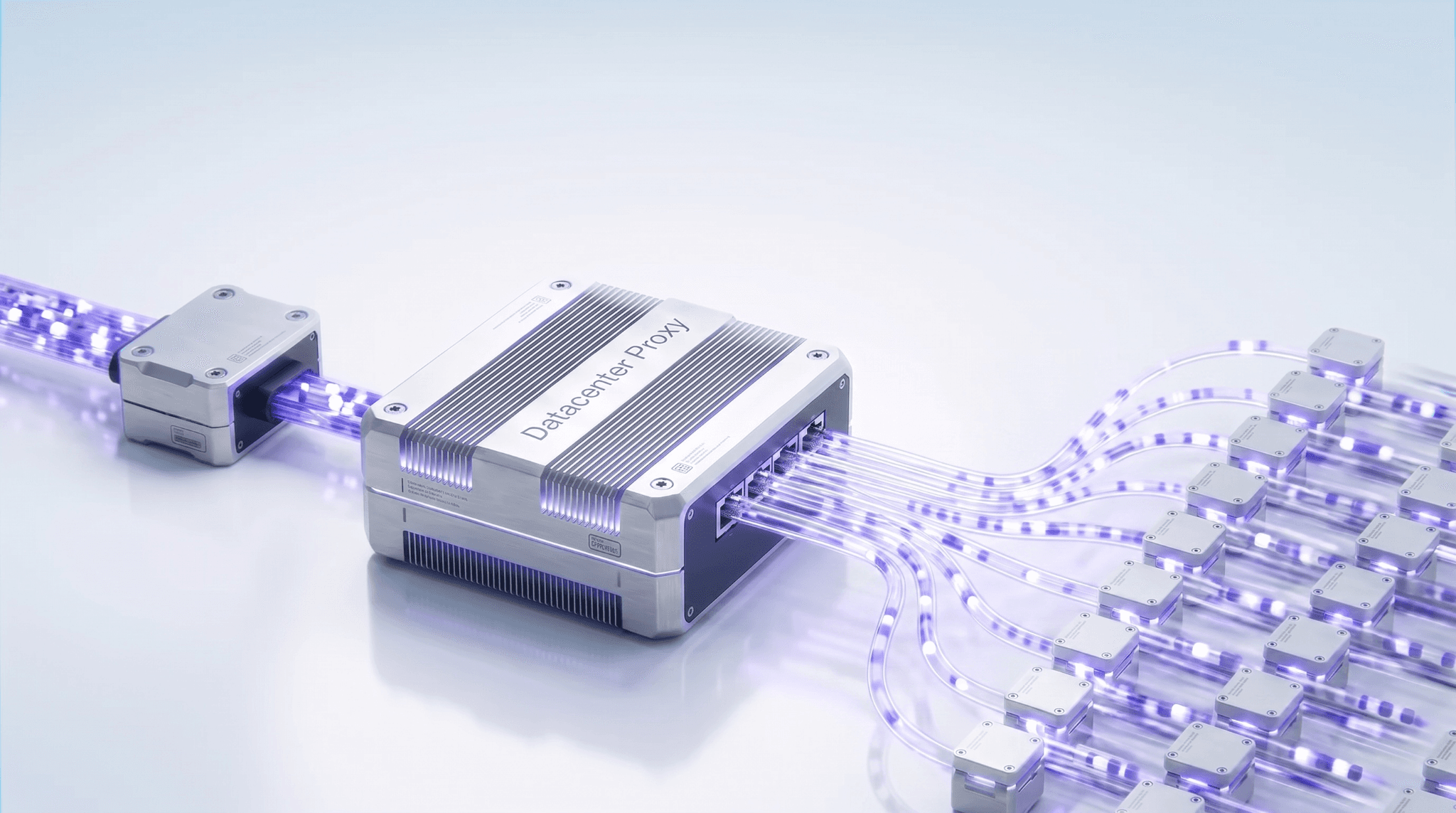
Web scraping is the main driver of the proxy technology market. Companies collect open data from the web to train neural networks, conduct scientific research, and conduct business analytics. According to Statista, the global data volume will grow from 173.4 zettabytes in 2025 to 527.5 zettabytes by 2029, tripling in just four years.
Servers can download gigabytes of data in seconds using multithreaded scripts that access different parts of a website through many IP addresses. This avoids limits on how many requests one computer can make. Without proxy networks, an automated collector gets blocked by the target site after about a hundred fast requests.
SEO Monitoring
Search engine optimization requires regular tracking of keyword positions in different geographic regions. Search engines return different results for users in New York, London, or Tokyo.
Marketers use server addresses with the desired geolocation to send queries to search engines and see the true picture of the results. Search robots fiercely resist automated parsing. Therefore, high-quality monitoring requires regularly rotating the addresses used.
Due to the continuous collection of data from search results, SEO specialists can quickly adjust the website promotion strategy. They can spot new heavy hitters on target queries before it affects the company's overall traffic.
Ad Verification
Digital advertising is a multi-billion-dollar business for advertisers. However, a good portion of this budget is prone to fraud and unscrupulous allocation. Fraudsters often conceal malicious sites or show ads in locations other than where they have paid. Big brands use proxy servers to independently audit advertising platforms. They visit websites posing as regular users from different countries, check if banners are displayed correctly, and find out fraudulent schemes.
Automated ad verification systems scan thousands of partner websites every minute, using server proxies. It allows for real-time detection of covert elements, link substitution, and hidden ad units that are siphoning away budgets with automated bots.
Auditors can view the website in its pristine state, without the influence of unscrupulous webmasters, thanks to clean server IP addresses. This way, companies save big on advertising budgets and increase the ROI of marketing campaigns.
Tracking Competitor Prices (e-commerce)
In e-commerce, dynamic pricing is essential for survival. Large retailers change prices several times a day based on competitors, supply, and demand. Special trading bots constantly collect competitor price lists from websites. E-commerce automation tools use proxies to solve the following problems:
- monitoring inventory levels;
- tracking the launch of new product lines;
- analyzing discount and promo code structures;
- collecting customer reviews;
- comparing delivery terms in different regions.
Marketers can quickly respond to changes in market conditions. Data sources in e-commerce are constantly protected, but properly configured IP address pools can bypass most standard filters. As a result, businesses maintain profit margins and offer customers the best prices on the market.
The resulting arrays of price data are fed into the retailer's machine learning algorithms. The program then automatically determines the optimal price for each product based on current demand and competitor prices, thereby maximizing the company's profits. Web proxies ensure the uninterrupted flow of this data. They act as a critical element in the value chain of a modern digital store, where every second of delayed information costs real money.
Other Uses
There are many secondary, yet important, use cases for server infrastructure. Cybersecurity companies use them to research malware activity and prevent DDoS attacks.
Software developers test their distributed systems and the load capacity of servers worldwide. Proxies also help bypass regional restrictions when testing the localization of multimedia platforms and streaming services.
Such tools are actively used in reputation management to aggregate reviews from hundreds of specialized sites. Large HR departments use them to parse job search sites to analyze average salaries in the market and find in-demand specialists.
Advantages and Limitations of Using Datacenter Proxies
Any technical tool has its strengths and weaknesses. The effectiveness of using server addresses directly depends on how accurately the project architect matches the requirements of the current task with the capabilities of the specific technology. Mistakes in selecting a network infrastructure often lead to wasted budget and precious time.
When assessing IT infrastructure, engineers need to look closely at leased line features. Understanding their strengths and limits helps build a stable, fault-tolerant data collection system. Experts also recommend planning and testing all network components in detail before moving the project into production.
Pros
The main advantages of server solutions lie in their technical capabilities and superior infrastructure compared to standard home networks. They are deployed in specialized technology clusters equipped with cutting-edge server hardware.
Today, more than 4,000 Tier III certificates have been issued in 122 countries, making this system the leading standard for data center reliability. According to these standards, commercial Tier III data centers provide at least 99.9% uptime, guaranteeing stable software operation.
The main advantages of using server systems include the following:
- powerful servers with premium throughput;
- huge available pools of unique addresses;
- availability of static and rotating options;
- minimal rental cost for each individual IP;
- completely unlimited traffic volume;
- instant automatic activation of purchased subnets.
These advantages make server addresses a fundamental element for automation systems. The low barrier to entry allows for testing working hypotheses without major financial investments. However, to get a complete picture, it's necessary to thoroughly analyze the existing technological limitations.
Cons
Despite the obvious operational advantages, the origin of these IP addresses imposes serious limitations on their use on modern secure web platforms. The commercial status of a network becomes the primary trigger for cybersecurity algorithms.
Developers have to cope with rigorous traffic filtering on popular portals. Security systems use sophisticated behavior analysis to detect automated systems. The main disadvantages of server addresses occur in the following situations:
- active blocklisting by advanced platforms;
- easy tracking and rapid detection of security systems;
- identical autonomous systems for an entire set of addresses;
- frequent security requirements to pass manual CAPTCHA verification;
- inability to consistently log in to popular social networks;
- mass automatic blocking by sites across entire subnets.
These limits naturally restrict what server technologies can do. Developers also need to constantly improve ways to avoid blocks so parsers keep working.
Final Thoughts
Server proxies are widely used in web analytics, scraping, and automation. They are fast, stable, and cheap, which makes them good for handling large amounts of data on less protected sites. But modern security systems, including AI-based ones, are getting more advanced. That's why developers need to use proxies carefully — they are not a universal way to access every website.
To deploy a hybrid IT environment, it is important to understand the steps required to build a distributed network. Companies are writing step-by-step instructions for adding different types of internet proxy servers. The sequence of steps involved in the process of deploying proxy technologies in the corporate environment is as follows:
- Determining target web resources for analysis.
- Calculating the required volume of network flows.
- Choosing a reliable server address provider like ProxyShard.
- Integrating credentials into the program code.
- Configuring internal identifier rotation logic.
- Conducting a test run on a limited sample.
The correct sequence of actions ensures minimizing the risk of data loss at the start of the project. A systematic approach to network architecture design allows the company to create a reliable foundation for business analytics.
FAQ
Are datacenter proxies legal?
Yes, using server proxies is completely legal in most countries, provided they collect open, public data. Liability arises only in the event of a violation of cybersecurity, copyright, or privacy laws.
How much do datacenter proxies cost?
Server proxies are significantly cheaper than residential proxies, typically priced between $1.00 and $2.00 per IP proxy address per month. Most reliable providers, such as ProxyShard, offer completely unlimited traffic for a fixed subscription fee.
How to set up datacenter proxies?
To configure them, enter the data received from your provider into your application's network parameters. To automate processes, these parameters are written directly into the parsing script code using specialized libraries.
How to reduce detection when using datacenter proxies?
To reduce the risk of detection, it is necessary to configure high-quality IP address rotation and use realistic HTTP headers.